Showing posts with label honey. Show all posts

Thursday, April 2, 2020

Immune Boosting Tonic

Here is a powerful all natural antiviral recipe that became my favorite remedy during cold and flu season over the last 5 years. This immune boosting tonic recipe is quite easy to make. It’s a garlic, ginger, lemon, honey remedy that’s suitable for the entire family, including kids!  Aids digestion and promotes detoxification too.


Ingredients:
  • 2 small fresh lemons (~1/2 cup) – (with the skin or not, cut into large chunks)
  • 1/2 cup fresh ginger – (peeled, cut into chunks)
  • 1/2 cup fresh garlic cloves – (peeled)
  • 1/2 cup raw organic Manuka honey

Instructions:Add all ingredients roughly chopped in a blender, pulsing for a few seconds until everything turns into a paste.
The mixture contains not only the juice but also the fibers from the whole fruit/vegetable which makes it even more beneficial for your gut microbiome.
This immune boosting tonic is best taken on an empty stomach in the morning and/or half an hour before meals or before going to bed.
As a preventive measure you can take one or two teaspoons per day based on personal requirement.
If you are in the middle of fighting a cold or an acute infection take 1 teaspoon every 3-4 hours.
The benefits of this tonic are best experienced if used regularly. 
Storage:
Store the immune boosting tonic in a seal-able glass container in the fridge. The longer its sits in the fridge the more potent it gets.

Tuesday, June 18, 2019

8 Health Benefits of Honey

I have been using Manuka honey to boost my immune system at the first sign of feeling sick.  I add bee pollen to my morning smoothie to get the anti-inflammatory benefits that I read about. With recently researching ‘sour honey’ for anticancer properties I stumbled on the work apiculture.  
Apiculture is the science and art of prolonging, sustaining, and retaining health by using products obtained from honeybee hives, such as honey, bee bread, bee venom, bee pollen, propolis, and royal jelly. I feel like just the last couple of years I have seen the growth of bee products in lots of different ways and did more research on what is actually proving to be affective. Here is the info I collected on the benefits of bee products, including honey, propolis, and royal jelly.

Honey is being recognized worldwide due to its high nutritive components that are beneficial for human well-being. It has been traditionally used by Egyptians, Greeks, Romans, and Chinese to heal wounds and diseases of the gut, including gastric ulcers. It has also been used as a remedy for cough, sore throat, and earaches. In India, Lotus honey has been traditionally used to treat eye infections and other diseases. 

Propolis is generally known as the “bee glue”, which is a generic name that refers to the resinous substance accumulated by the bees from different types of plants. Propolis functions in sealing holes and cracks and for the reconstruction of the beehive. It is also used for retaining the hive's internal temperature, preventing weathering and invasion by predators. Propolis has numerous applications in treating various diseases due to its antiseptic, anti-inflammatory, antioxidant, antibacterial, antifungal, and anticancer, properties. Part of the reason it has such applications is it contains important vitamins, such as B1, B2, B6, C, and E and useful minerals such as magnesium, calcium, potassium, sodium, copper, zinc, manganese, and iron.

Royal jelly, a white and viscous jelly-like substance, is a form of hypopharyngeal and mandibular gland secretion from the worker bees. It is also known as a “superfood” that is solely consumed by the queen bee. Royal jelly is also fed to the honeybee larvae upon hatching. This superfood is the main reason for the longevity of the queen bee compared to the other bees. Royal jelly is widely used as a dietary nutritional complex to help combat various chronic health conditions and is seen to be antibacterial, antitumor, antiallergy, and anti-inflammatory. Approximately 185 organic compounds have been detected in royal jelly. Royalactin is the most important protein present in royal jelly. In addition, royal jelly has hormones such as testosterone, progesterone, prolactin, and estradiol that can be very helpful.


8 Health Benefits of Honey

1. Wound Management
Honey has traditionally been used to treat wounds, insect bites, burns, skin disorders, sores, and boils. Scientific documentation of the wound-healing capabilities of honey validates its efficacy as a promoter of wound repair and an antimicrobial agent.  

Honey has a beneficial effect on child dermatitis caused by excessive use of napkins and diapers, eczema, and psoriasis. The effect of honey mixed with beeswax and olive oil was investigated on patients with psoriasis showed significant improvements (reference)


2. Gastrointestinal (GI) Disorder
Natural honey is composed of enzymes that facilitate the absorption of food.  Honey also provides some nutrients, such as minerals, phytochemicals, and flavonoids, that aid digestive processes in the body Manuka honey has antibacterial properties as well.  Studies have also shown that natural honey contains high amount of prebiotics, hastening the growth of Lactobacillus and Bifidobacteria.

3. Oral Health
Honey is useful for the treatment of many oral diseases, including periodontal disease, stomatitis, and halitosis. In addition, it has also been applied for the prevention of dental plaque, gingivitis, mouth ulcers, and periodontitis. The antibacterial and anti-inflammatory properties of honey can stimulate the growth of granulation tissue, leading to the repair of damaged cells 

4. Pharyngitis and Coughs
Pharyngitis, commonly known as sore throat, is an acute infection induced by Streptococcus spp. in the nose and throat.  In addition to streptococci, viruses, nonstreptococcal bacteria, fungi, and irritants such as chemical pollutants may also cause sore throat. Manuka honey is effective for treating sore throat with its anti-inflammatory, antiviral, and antifungal properties. Honey coats the inner lining of the throat and destroys the harmful microbes while simultaneously soothing the throat.  The antioxidant and antimicrobial properties of honey aided in minimizing persistent cough and ameliorated sleep for both children and adults following honey intake (2.5 ml). A comparative study on children with different natural products reported that honey was found to be the widely used remedy for pneumonia 82.4% [reference].
5. Gastroesophageal Reflux Disease
Gastroesophageal reflux disease (GERD) is a mucosal infection caused by contents of abnormal gastric reflux into the esophagus. Symptoms of GERD include heartburn, inflammation, and acid regurgitation. Consumption of honey helps this condition by coating the esophagus and stomach lining, thus preventing the upward flow of food and gastric juice. Honey can further stimulate the tissues on the sphincter to assist in their regrowth and finally reduce the chances of acid reflux.

6. Bowel Movements
Honey has been known to minimize the duration of viral diarrhea compared to conventional antiviral therapy. Manuka honey on an empty stomach helps with inflammatory bowel syndrome (IBS) experiencing severe diarrhea or constipation, bloating, and stomach discomfort.

7. Liver and Pancreatic Diseases
Honey helps to soothe pain, balance liver systems, and neutralize toxins. Complications in the liver system can be attributed to oxidative damage. Honey exhibits antioxidant activities that have a potential protective effect on the damaged liver. Honey, which has a 1 : 1 ratio of fructose to glucose, may help to promote better blood sugar level, which is useful for those suffering from fatty liver disease since it provides adequate glycogen storage in liver cells. Insufficient glycogen storage in the liver releases stress hormones that impair glucose metabolism over time. Impaired glucose metabolism leads to insulin resistance and is the main factor of fatty liver disease. 

8. Breast Cancer

Imbalance in estrogen plays a role in breast cancer growth. Phytoestrogens are chemicals found in nature that when ingested act like estrogen in the body.  Honey has phytoestrogens in it. Very specifically Tualang honey shows highly specific and selective killing effects towards breast cancer cell lines and has a good potential as a chemotherapeutic agent [reference].

Monday, March 19, 2018

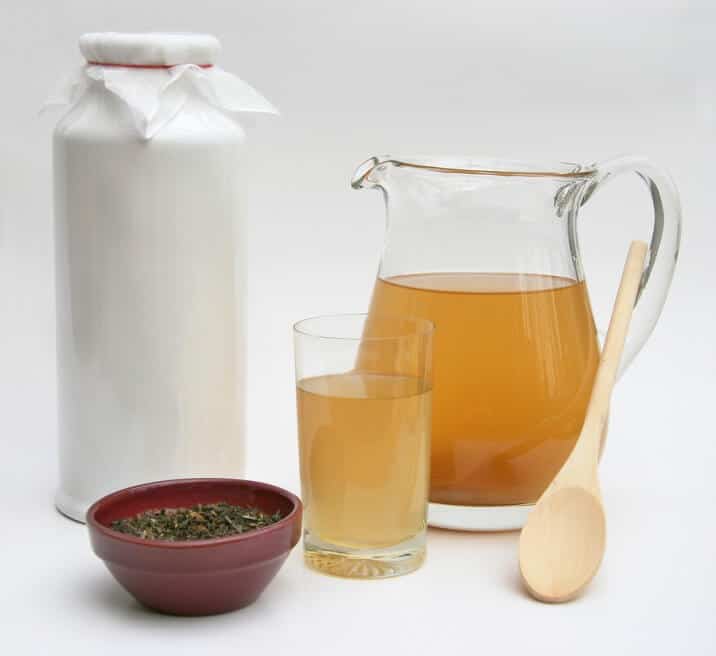
DIY How to Make Kombucha

Kombucha is simple to make yourself. We recommend you give it a shot because brewing your own unpasteurized kombucha is rewarding when you consider the cost of purchasing store-bought bottles.
To learn more about the health benefits, read here. It's beneficial to drink at least half a cup daily to get the health benefits.  This recipe makes about eight cups of kombucha, but you can also double the recipe to make more, and you still only need one SCOBY disk.

Kombucha Recipe

kombucha tea
Yields: 8 cups
You need:
  • 1 large glass or metal jar or bowl with a wide opening
Avoid using a plastic jar or bowl because the chemicals in the plastic can leach into the kombucha during the fermentation period. Ceramic pots might cause lead to leach into the kombucha once the acid comes into contact with the ceramic glaze. Look for a big metal or glass jug/jar/bowl and make sure the opening is wide enough to allow a lot of oxygen to reach the kombucha while it ferments.
  • 1 large piece of cloth or a dish towel
Secure this material around the opening of the jar with a rubber band. Do not use a cheese cloth, as it allows particles to pass through. You can even try using an old thin cotton t-shirt or some simple cotton fabric from any textile store.
  • 1 SCOBY disk
You can find a SCOBY disk in health food stores or online for relatively inexpensive amounts. A SCOBY disk can be vacuum-sealed in a small pouch and shipped directly to your house for only a few dollars, while still preserving all of the active yeast ingredients.
  • 8 cups of water
I would use filtered water, if possible.  
  • ½ cup organic cane sugar or raw honey
Yes, this is one of the few times I’ll tell you to use real sugar! Most of it is actually “eaten” by the yeast bacteria during the fermentation process, so there is very little sugar left in the recipe by the time you consume it. It is important to use only organic cane sugar and not white refined sugar.

  • 4 organic tea bags
Traditionally, kombucha is made from black tea, but you can also try green tea to see which you prefer.
  • 1 cup of pre-made kombucha
You’ll need to purchase your first batch or get a cup from a friend who has recently made homemade kombucha. For future batches, just keep a cup on hand for the next time. Be sure to purchase only organic, unpasteurized kombucha. Pasteurized varieties do not contain the appropriate live cultures you need.
Directions:
1. Bring your water to boil in a big pot on the stovetop. Once boiling, remove from heat and add your teabags and sugar, stirring until the sugar dissolves.
2. Allow the pot to sit and the tea to steep for about 15 minutes, then remove and discard tea bags.
3. Let the mixture cool down to room temperature (which usually takes about one hour). Once it’s cooled, add your tea mixture to your big jar/bowl. Drop in your SCOBY disk and 1 cup of pre-made kombucha.
4. Cover your jar/bowl with your cloth or thin kitchen towel and try to keep the cloth in place by using a rubber hand or some sort of tie. You want the cloth to cover the wide opening of the jar and stay in place but be thin enough to allow air to pass through.
5. Allow the kombucha to sit for 7–10 days, depending on the flavor you’re looking for. Less time produces a weaker kombucha that tastes less sour, while a longer sitting time makes the kombucha ferment even longer and develop more taste. Some people have reported fermenting kombucha for up to a month before bottling with great results, so taste test the batch every couple of days to see if its reached the right taste and level of carbonation for you.
Usually, the warmer your home is, the less time the kombucha needs to ferment. Once you’re happy with the taste, put your kombucha into smaller glass bottles and refrigerate the kombucha for at least 24 hours to allow it to cool and finish carbonating. The longer you refrigerate it before opening, the more fizzy it will be.
Note that as the fermentation process happens, you will notice that the SCOBY disk “grows” a second SCOBY disk. Many people call the SCOBY that you purchased and used to make the kombucha the “mother” SCOBY and the second SCOBY that grows the “baby.” The mother SCOBY is located on top of the baby.
You can actually use the newly formed baby SCOBY to create a whole new batch of kombucha, so you don’t want to throw out the baby disk. Store the baby SCOBY in a bit of already-made kombucha in a glass jar while not using it so you have it on hand to start a new batch when you want it. It will be “active” for several weeks when it’s stored in some kombucha at room temperature on a counter top or in a pantry.
While some people prefer to keep the mother SCOBY disk attached to the baby, others prefer to throw away the mother SCOBY once the kombucha is finished fermenting.
Keeping the mother disk hasn’t caused any reported problems or contamination. According to some sources, the mother disk can keep fermenting new kombucha batches for about another month after its first use but will then become inactive and should be thrown away.

Brewing Flavored Kombucha

The recipe above is for a basic, unflavored kombucha. You can try adding unique flavors like fresh-squeezed lemon or lime juice, ginger root “juice” made by blending ginger and water, blended berries, fresh-squeezed orange, pomegranate or cranberry juices.
We recommend doing this after the kombucha has fermented and is ready to drink, although some people prefer to add flavor-enhancers to the kombucha a day or two before it’s done so the flavor can intensify. Either way seems to work well.

Storing Kombucha

Once your homemade kombucha is complete you’ll want to store it in a clear glass bottle or jar with a tightly fit lid, preferably not metal, if you have the option. Plastic bottles may swell or harden and color from dyed jars can get into the drink.
When bottling kombucha, leave an inch or less of air at the top of the bottle. This should allow for an appropriate amount of carbonation.
It’s important never to shake a bottle of kombucha and risk exploding its container. Try holding your entire hand over the lid as you open it to prevent it from popping off unexpectedly.
Be sure to refrigerate your completed kombucha to extend its shelf life. If you’ve added flavoring, consider that when storing the kombucha. For example, fresh fruits will go bad in the kombucha long before the drink.

Kombucha Precautions

Most people experience great benefits drinking kombucha and have no adverse side effects.
Kombucha side effects seem to be more of a risk when making homemade kombucha because contamination is possible, and the SCOBY disk and finished product aren’t tested for quality like they are when manufactured commercially. If you’re going to brew your own, use sterile equipment, clean working spaces and high-quality ingredients.
A small percentage of people experience bloating, nausea, infections and allergic reactions when drinking kombucha. Because kombucha has a high level of acidity, it’s possible that this can cause problems for people with digestive problems like heartburn or sensitivity to very acidic foods.
If you are concerned about these issues, start drinking a small amount in moderation and gradually work your way up to drinking more in order to see if you have any negative reactions to it. Stick to about eight ounces per day or less, especially in the beginning. To limit your risk, buy pre-made, unpasteurized kombucha that’s been tested for bacterial contamination.
Kombucha is brewed using black tea and sugar, which when fermented, turns into alcohol in very small amounts (only about 1 percent of kombucha is believed to be alcohol). So a warning to those who are avoiding alcohol.

Otherwise enjoy this healthy drink!

Tuesday, February 6, 2018

DIY Remedy for Boosting the Immune System

This winter season has been brutal on our immune systems.  Even people who never get sick through the flu season are sniffling, courageously fighting whatever germs come their way.  Here is my favorite remedy to make when starting to feel under the weather.


Why this home remedy for cough and cold works:

This recipes contains the best things for you to fight a cold or flu naturally:
Lemon: High in vitamin C, which keeps the immune system strong and neutralizes the free radicals in your body. This reduced the inflammation and swelling.

Ginger:
 Helps you sweat out the toxins in your body, which is helpful when you have a cold or flu. Ginger is also helpful for settling upset stomachs, dizziness, nausea, vomiting and cold sweats.


Garlic:  Rich in antioxidants, vitamin B6, vitamin C, and manganese. A recent study on the antibacterial and antiviral properties of garlic shows that it can help boost the immune system. This means that garlic can help reduce the occurrence and the severity of the symptoms of a cold and shorten the recovery period as well. Garlic may also help with congestion in the sinuses by reducing inflammation in the nasal passages. 

Manuka Honey:
 Soothes a sore throat, making it an effective and natural cough suppressant. This improves the body's ability to fight infection and decreases the risk of fevers. The natural sweetness of honey also balances the tartness of the lemon and the ginger's and garlic's spice in this concoction.  Read this to learn more about Manuka honey. 


You can make this immunity boosting, body soothing concoction ahead of time and store in the fridge. I usually keep my mixture for about two months, and then make a new batch.

INGREDIENTS

  • 2 lemons thoroughly cleaned
  • 2 piece fresh ginger about the size of your pointer and middle finger togehter
  • Manuka honey
  • 4 cloves of garlic
  • 12 oz mason jar

INSTRUCTIONS

  1. Slice lemons and ginger. Chop garlic.
  2. Place the lemon, garlic and ginger slices in the mason jar, alternating layers of each.
  3. Slowly, pour honey over the lemon and ginger. Allow the honey to sink down and around the lemon and ginger slices. Fill jar to the top with honey and seal tightly.
  4. Store in the refrigerator. Over time, the mixture will start to turn into a loose jelly.
  5. When you are in need of some soothing tea, scoop 2-3 tablespoons into a mug full of hot water—be sure to scoop whole pieces of garlic, ginger and lemon. Allow to steep for 3-4 minutes and sip away.

Monday, January 29, 2018

got milk? 8 Reasons to start Drinking Golden Milk and How to Make It

Having recently written about turmeric helping with weight loss I wanted to talk more about the health benefits of turmeric because there is so much more!  It was in that blog I talked about taking turmeric pills in order to have high doses of curcumin, which is the main anti-inflammatory ingredient in turmeric.  Turmeric can be used in cooking, especially Indian dishes.  It can easily be added to a healthy shake as well.  I wrote how it can be used in a health drink with apple cider vinegar here and now I am going to talk about its health benefits and making another delicious healthy drink called golden milk.  For all my nondairy drinkers out there, don't worry, you can use seed or nut milk as well.  My favorite way to make golden milk is with coconut milk.  But first, here are 8 reasons to start adding it in to your diet:
  1. Turmeric milk helps build immunity
  2. Helps sleep
  3. It is a good remedy for digestive problems.
  4. It supports the liver.
  5. Helps fight cancer
  6. Clarifies the skin.
  7. Gives relief from autoimmune diseases
  8. Good for fighting Alzheimer's disease
When adding it to your diet you need to know that adding black pepper to it helps turmeric become more bioavailable.  Which is another way of saying your body can absorb more turmeric if you add black pepper with it.  Drinking golden milk before bed can help sleep because turmeric reduces inflammation, lowers your blood sugar levels, helps your liver to detoxify, boosts your immune system and eases your digestive system – all of which help you to get to sleep faster, to sleep better, and to wake up feeling refreshed.

How do you make golden milk?
Serves 2

Ingredients

  • ½ cup warm water
  • 1 cup coconut milk (or any milk you prefer)
  • 2 tsp turmeric powder
  • 2 tsp virgin coconut oil
  • ½ inch ginger knob, peeled and grated
  • 1/4 tsp. black pepper or 2 black peppercorns, crushed
  • ½ tsp cinnamon powder
  • ½ tsp nutmeg powder
  • ¼ tsp cardamom powder
  • *Optional 2 tsp raw organic honey or pure maple syrup for the vegan version

Preparation

  1. Whisk coconut milk, cinnamon, turmeric, ginger, honey, coconut oil, black pepper, and 1/2 cup water in a small saucepan; bring to a low boil. Reduce heat and simmer until flavors have melded, about 10 minutes.
  2. Do Ahead. Golden milk can be made 5 days ahead and reheated.
Golden milk powder with the exact ratios of spice can be bought at the office or here.  Just add a teaspoon to simmering coconut milk or almond milk and you're done!

A great place to buy a golden milk latte with almost any type of milk you want is at Dr. Smood with the closest one to the office being on Lexington Ave at 47th St.  


Tuesday, January 17, 2017

Have a Sweet Tooth? Buddha Chocolate is Healing Arts Approved!

I know healthy chocolate is hard to come by. My two favorites so far have been making it myself with honey (recipe) or Hu chocolate which you can find at some Whole Foods and Hu Kitchen on 5th Ave. and 14th St. in Manhattan. Hu chocolate uses coconut sugar as the sweetener and it is delicious! Flavors come in regular, salty, mint, banana, cashew butter, almond butter and puffed quinoa, and hazelnut praline. I was just recently gifted Buddha Chocolate which is another great option I wanted to share! For about the same price you can have chocolate cups and bars of almond butter, coffee, fudge, lavender, s'mores, rose sea salt, mint chip, quinoa crisp, chia cookie, hazelnut and more! I love the artisanal flavors and the chocolate is handmade in Oregon and have made their way into these stores:


Commodities Natural Market
165 1st Ave
(between 10th St & 11th St)
New York, NY 10003
(212) 260-2600

Integral Natural Foods
229 W 13th St
(between 7th Ave & Greenwich Ave)
New York, NY 10011
(212) 243-2642

Westerly Natural Market
913 8th Ave
(between 54th St & 55th St)
New York, NY 10019
(212) 586-0422

Elm Health
56 7th Ave
(between 13th St & 14th St)
New York, NY 10011
(212) 255-6300

The Health Nuts
1208 2nd Ave
(between 63rd St & 64th St)
New York, NY 10065
(212) 593-0116

High Vibe
138 E 3rd St
(between 1st Ave & Avenue A)
New York, NY 10009
(212) 777-6645

Organic Planet Williamsburg
169 Bedford Ave
(between 8th St & 7th St)
Brooklyn, NY 11211
(718) 388-8320

Organic Planet Morgan Ave
43 Bogart St
(between Grattan St & Moore St)
Brooklyn, NY 11206

Organic Planet Pharmacy Driggs Ave
205 N 9th St
Brooklyn, NY 11211
(347) 799-2213

Perelandra Natural
175 Remsen St
Brooklyn, NY 11201
(718) 855-6068


You can also order them online and try a variety pack. Also made with coconut sugar they are delicious!


Monday, May 16, 2016

The Magic of Bees: The Health Benefits of Honey and Bee Pollen

Honey is one of the oldest known sweeteners.  In Russia, the extremely potent honey from Siberian bees was give out as a prescription for almost all ailments.  In ancient Egypt honey was used to heal wounds. However, not all honey on the store shelves is the same.  Honey is extremely heat sensitive due to the sheer number of beneficial enzymes, vitamins and minerals.  Honey that has been processed in any way losses most of its benefits.  Also, honey that was not properly harvested and made by bees that have been fed sugar instead of naturally collecting pollen from flowers and improper storage can contribute to a loss in nutrients.  Honey that is mass produced is just as bad as sugar.

Raw honey is the best honey.  It is an alkalining food that doesn't ferment in the stomach.  It can be used to counteract acid indigestion.  When mixed with ginger and lemon juices it also relieves nausea and supplies energy.  Raw honey has been reported to be good for respiratory infections, liver problems. stomach ulcers, digestive problems, constipation, strengthen the immune system and promote general vitality.


Manuka honey is most nutritious of honeys.  I have never been able to find it raw but it is worth the hype and the price.  It is only made in New Zealand and Australia from European honey bees foraging on the manuka tree. To be labelled New Zealand mānuka honey at least 70% of its pollen content should come from the manuka tree. In 2004 Britain's National Health Service (NHS) licensed the use of medical grade manuka honey as a wound dressing, And in recent tests conducted at Sydney University's School of Molecular and Microbial Biosciences, manuka honey killed every type of bacteria, including antibiotic-resistant "superbugs". For some reason this antibacterial property is stable and doesn't lose its potency when exposed to dilution, heat or light as in other processed honeys.  So I always have a jar of it in my house that I take out when I feel I am starting to come down with something. Manuka honey comes with a number on the label +5, +10 etc.  the higher the number the more enzymes are in the honey and so the more medicinal the honey is but also the more expensive it is.  So i buy the highest number and use it only when I feel my throat or lungs need it and  when I just want something sweet I use raw honey. 

Also made from bees is bee pollen and it is so full of nutrition it is labeled as a super food! It is about 40% protein and since about half of that is in the form of free amino acids it is ready to be used directly by the body and can contribute significantly to one's protein needs.
It interestingly cannot be synthesized in a laboratory.  When researchers feed bees manmade pollen the bee dies even though all the known nutrients are present in the lab-produced synthesized food.  It is important to recognize that one teaspoon of pollen takes a bee working eight hours a day for one month to gather.

Pollen is known to improve endurance and vitality, aid in recovery from chronic illness, reduce cravings and addictions, regulate intestines, build new blood and boost the immune system.  It is thought to protect against radiation and to have anti-cancer qualities.  Pollen is rich in proteins, free amino acids, and vitamins including B-complex and folic acid. It is a complete food. and according to researchers at the Institute of Apiculture, Taranov, Russia, "Pollen is the richest source of vitamins found in nature in a single food." Research still continues in how many nutrients are in bee pollen but so far over 5,000 enzymes and co-enzymes have been found, far more than is naturally present in any other food!