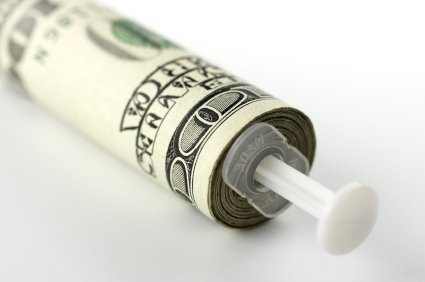
Showing posts with label vaccine. Show all posts

Sunday, July 12, 2020

Understanding COVID-19 Antibody Testing

I have been getting a lot of questions lately about the Coronavirus antibody test so I wanted to take the time to explain it here.  If you have gotten tested for the antibodies and it is positive, that’s good news but experts aren’t sure exactly how good it is and here’s why.

If you have antibodies it means you have had a past infection with the coronavirus that causes COVID-19. Antibodies are proteins that help fight off infections and can provide protection against getting that disease again (you have immunity). Antibodies are disease specific. For example, measles antibodies will protect you from getting measles if you are exposed to it again, but they won’t protect you from getting other bacteria or viruses.  

When fighting an infection your white blood cells can produce these proteins to build immunity.  For every infection the body could make two different kinds of antibodies.  There are IgM antibodies, which happen early in an infection and IgG antibodies, which are more likely to show up later. But the body doesn’t always make antibodies when fighting an infection.  It is possible to have gotten infected with the coronavirus and not make antibodies.  


Most people have IgG antibodies about 14 days after symptoms start. They usually stay in your blood long after the infection goes away, but we don’t know how long that is for the new coronavirus.

Across the US, Americans are anxious to learn whether they may have been infected with the coronavirus – which they hope would offer some immunity. In New York, researchers found that 19.3%, which is well below the estimated 67% needed to achieve community immunity.  

But while the tests may be helpful in understanding how the virus moves through a population, researchers say much remains unknown: not all tests produce consistently accurate results, and scientists are still researching whether and for how long antibodies offer immunity from reinfection. The recommendation is to not change any social distancing or other practices based on an antibody test results, simply because we don’t know how long or even if there is protective immunity against reinfection if you’re antibody-positive. There are still too many unknowns, both about the accuracy of the antibody tests that are available and about the nature of the virus itself.

The World Health Organization, in late April, released a scientific brief that said, "There is currently no evidence that people who have recovered from Covid-19 and have antibodies are protected from a second infection."  While studies of blood samples taken from people who have recovered from Covid-19 do show an immune response to the virus, some have "very low levels of neutralizing antibodies in their blood," WHO said.  It's possible that immunity may need to occur on a cellular level as well as via antibodies circulating in the blood.  "The body also makes T-cells that recognize and eliminate other cells infected with the virus. This is called cellular immunity," WHO explained.  Along with antibodies, the "combined adaptive response may clear the virus from the body, and if the response is strong enough, may prevent progression to severe illness or reinfection by the same virus," WHO said.

Antibody tests should not be used to diagnose a current COVID-19 infection. An antibody test may not show if you have a current COVID-19 infection because it can take 1–3 weeks after infection for your body to make antibodies. To see if you are currently infected, you need a viral test. Viral tests identify the virus in samples from your respiratory system, such as a swab from the inside of your nose.

There are plenty of antibody tests floating around that haven't been reviewed or validated by the US Food and Drug Administration. According to the FDA, there are currently over 130 unvetted antibody tests in use, along with the dozens of diagnostic tests. The agency recently announced it was tightening its policy to keep unproven and even fraudulent tests from entering the market by requiring commercial test makers to meet new standards of accuracy and submit information proving testing quality. The FDA maintains a public website with the performance rates of the 12 EUA tests, showing how likely a certain test is to give false positive confirmations of the antibodies, and sensitivity, how likely the test will give a true positive result when someone has the virus. But the numbers can be hard to interpret by consumers who don’t have medical background

To date, the antibody test that seems to be the most accurate is made by Roche but that could be changing soon.  For more info on the Roche test, https://www.roche.com/media/releases/med-cor-2020-05-03.htm

Monday, February 12, 2018

What to do About the Flu this Season


This winter seems to be worse than others for people getting sick.  I have been a doctor for over 11 years now and this seems to be one of the worse flu seasons.  Because of it being worse than others media seems to be pushing the vaccine now more than ever but the first data on how well the flu vaccine is working this season in North America has just been published — and it helps explain why everyone appears to be sick right now.  


It actually explains the vaccine's ineffectiveness so getting the flu vaccine makes even less sense right now.  The study, from the journal Eurosurveillance, found that the flu vaccine was only 10 percent effective against H3N2 (the main flu subtype going around in the US this season) among adults aged 20 to 64 years old in Canada.  The protection rate rose to 17 percent when considering all age groups.


In most adults, the study suggests the shot would only prevent 10 percent of H3N2 flu cases. So if 100 in 1,000 unvaccinated people develop flu, the number would drop to 90 in 1,000 among vaccinated people — a very small difference in flu risk between vaccinated and unvaccinated individuals. And more than 80 percent of confirmed US flu cases have involved H3N2.


“The evidence is mounting, from Australia and now from Canada, that the vaccine protection is low [this year],” said lead study author Danuta Skowronski, an influenza epidemiologist at the British Columbia Center for Disease Control. “Given the same H3N2 subtype [is circulating in the US], our estimate of low vaccine protection should also apply to the US.”


In a good year, the flu shot’s effectiveness hovers between 50 and 70 percent. But in years when the H3N2 type of flu virus circulates — as it is this year — the vaccine tends to be less protective.


So Skowronski wasn’t surprised by the dismal data. Plus, in Australia, where the flu season peaks in August and H3N2 struck as well, early estimates suggested the shot was only 10 percent effective there too.


There are a couple of reasons why it’s harder to vaccinate against H3N2. For one, the virus mutates as it moves through the population at a faster rate than other flu viruses — making it even harder to design a shot that matches the circulating virus.


One other reason the flu vaccine tends to underperform in H3N2 years has to do with ... eggs. To produce the vaccines, manufacturers need to grow a lot of flu virus — and they discovered long ago that flu virus grows extremely effectively in eggs. So viruses are injected into fertilized hen’s eggs, incubated for several days while they replicate, then harvested from the eggs, killed (or inactivated), and purified to go into vaccines.


“It’s an antiquated process, but it’s time-honored,” Anthony Fauci, the head of the NIH’s infectious diseases division, explained. While flu vaccines developed with more modern (cell-based and recombinant) methods of production have been licensed in the US, it’s not yet clear they are more protective against flu than the egg-based vaccines.


Plus, no other cell system comes close to growing the flu virus as cheaply or efficiently as eggs, and the industry has invested a lot in the egg-production infrastructure. So, Fauci explained, “We are stuck in the [egg-based] way, and it’s tough to transition to a more modern technology.”


But lately, researchers have found that there are problems with the egg-based approach that specifically relate to H3N2. “In the process of adapting virus to grow in eggs, that seems to introduce further changes to the [H3N2] virus, which may impair the effectiveness of the vaccine,” Belongia said. In other words, while growing the flu virus for vaccines, H3N2 mutates to adapt to the eggs, which seems to result in a vaccine mismatch.


Flu activity most commonly peaks in the United States between December and February so we have a few more weeks before we are in the clear.  Until then if you want to do what you can to stay protected Healing Arts does offer the homeopathic version of the 2017-2018 flu vaccine. It's only $16 and will last you the rest of the flu season (we now have the 2018-2019 version). 


We also have Wellness Blend that I formulated because I wanted that one supplement to help people both prevent and fight both bacterial and viral illnesses.  Sometimes when people come to my office sick they need 3 new supplements just to fight off their cold.  It's ironic but sometimes when we feel the sickest is when we feel the least inclined to take our supplements.  So to help I wanted to create one supplement that would cover what 3 supplements would do to try to make it easier for my patients.  


It's formulated to also help prevent getting sick. Just take one capsule a day.  When feeling run down, like you might be catching something, take 2 capsules a day and when sick, take 3 capsules a day.  Best is to get muscle tested for it but if you can't get muscle tested those are my suggestions.  

Stay hydrated, eat well, get good sleep and then take those two supplements to prevent getting sick and you should do well this flu season!

Saturday, July 9, 2016

Green Vaccine

The concept of the vaccine is accurate.  Introducing a germ into the body in a low dose so the immune system can build antibodies to it and not get sick in the future is how the body was made to deal with germs.  The problem with vaccines is not the germ but the mercury, aluminum, formaldehyde and any other toxins they put in it.  There is a way to get a vaccine using homeopathy and not injections.  The method is called homeoprophylaxis, or HP for short. HP is delivered on tiny sugar pellets, one disease at a time, devoid of adjuvents, preservatives, antibiotics, animal viruses, GMOs or excipients of any kind. It contains only the frequency of the disease. This is how illness occurs in nature. The innate developing immune system recognizes one disease, begins an immune response by producing a fever, then a discharge or eruption, and then resolution by developing lifelong immunity to a specific virus. HP produces a similar response yet in a much milder way. We might observe a very brief runny nose or perhaps a longer nap. However, there is no immune system confusion, no viral competition, no crossed signals, and no system overload like with conventional vaccines!


HP is made by serial dilution of an original substance, either from a natural disease or from an animal, mineral or vegetable source. It’s this stimulation to the immune system that primes it to recognize a disease when encountered in the environment to effectively mount an immune response in the most natural way.
 
There has never been a death from homeoprophylaxis, nor are there dangerous side effects. Large-scale observational studies have been conducted for the following diseases:

Leptospirosis in Cuba (2.5 million people)
Meningitis in Brazil (85,000 people)
Japanese encephalitis in India (20 million people)
Homeoprophylaxis is also effective for the prevention of childhood diseases as observed in 3500 children (Golden, Isaac. “Homeoprophylaxis-A Fifteen Year Clinical Study: A Statistical Review of Efficacy and Safety of Long Term Homeoprophylaxis. Gisborne. Vic. 2004).
When and Where to Use Homeoprophylaxis

There are 3 applications for HP –
Endemic disease (such as leptospirosis)
Short term epidemics (such as influenza)
Childhood diseases
For endemic disease there have been large studies (millions of people) and over time with annual dosing, the stats improve and disease incidence reduces significantly. In short term epidemics, like flu, you just dose for a few weeks/months until the risk is past.  For childhood disease there are single monthly doses for a period of about 3 years.  This includes 8 diseases that are on the recommended schedule that parents typically vaccinate for.  Protection begins immediately with the first dose and continues for a period of about 10 years. Re-doses can be administered in teen years or young adulthood depending on exposure to disease and risk of the specific disease.

For those traveling to foreign countries, HP is an easy and safe alternative to tropical disease vaccines. While some travel clinics will claim that you ‘must’ receive vaccines to travel, this is inaccurate. The only vaccine required to re-enter the US is yellow fever if you have visited a country where yellow fever is endemic. This information can be found on the CDC site under “travel” where you can click links to each country and learn of the yellow fever risk. All other vaccines for hepatitis, dengue fever, typhoid, malaria, and others can be declined and suitable HP doses can provide protection. Many of the studies already conducted have taken place in countries where these tropical epidemics exist.

To learn more the second international conference for parents and healthcare practitioners is taking place in St. Petersburg Florida, October 7-9, 2016.
Click here to find out the details:  worldwidechoice.org/conference

Sunday, February 7, 2016

U.S. Supreme Court Calls Vaccines "Unavoidably Unsafe".

I don't think many of us need the Supreme Court to tell us that vaccines are unsafe. It is nice to know that our government sees vaccines that way since 2011 when it was decided (in Section 22 of the Vaccine Act) that Big Pharma no longer has to be responsible for adverse reactions of vaccines or even death. 42 U. S. C. §300aa–22. “No vaccine manufacturer shall be liable in a civil action for damages arising from a vaccine-related injury or death associated with the administration of a vaccine after October 1, 1988, if the injury or death resulted from side effects that were unavoidable even though the vaccine was properly prepared and was accompanied by proper directions and warnings.” §300aa–22(b)(1).


I know I am about 5 years late on this news but since it was just brought to my attention this weekend by a fellow practitioner and I was appalled that our government will no longer protect it's citizens from Big Pharma and then have the audacity to stop protecting us starting October 1, 1988. One example that they use to describe vaccines as “unavoidably unsafe” products— i.e. , those that “in the present state of human knowledge, are quite incapable of being made safe for their intended and ordinary use”—are not defective. As “[a]n outstanding example” of an “[u]navoidably unsafe” product, the vaccine for the Pasteur treatment of rabies, which not uncommonly leads to very serious and damaging consequences when it is injected”; “[s]ince the disease itself invariably leads to a dreadful death, both the marketing and the use of the vaccine are fully justified, notwithstanding the unavoidable high degree of risk which they involve.” This provides that “seller[s]” of “[u]navoidably unsafe” products are “not to be held to strict liability” provided that such products “are properly prepared and marketed, and proper warning is given.”

Please, share this with others for I want to spread the word so people can truly second guess whether or not they want that next vaccine knowing that the government knows it is unavoidably unsafe and will not hold Big Pharma responsible for any adverse reaction you may have, including death.

Friday, August 29, 2014

Formaldehyde Toxicity

A common chemical that I help patients detox in my office is formaldehyde. Now you may be asking yourself, "isn't that what they use to preserve dead bodies?" and the answer is yes! Formaldehyde has been classified as a known human carcinogen (cancer-causing substance) by the International Agency for Research on Cancer and as a probable human carcinogen by the U.S. Environmental Protection Agency. Even with formaldehyde labeled as such it is used in new clothes, new cars, new carpets, new mattresses, new etc. It is that new clothes smell. Industries use formaldehyde as a fire deterrent. So if the warehouse catches on fire products are less likely to burn if they are sprayed with formaldehyde. Solution: wash all your new clothes once and when getting a new carpet or new couch air ventilation is key because it will eventually gas off.

Formaldehyde is also found in nail polish, wood pressed furniture, hair dye and straightener treatments, other treated lumber, and cigarette smoke. People who consume diet food will also need to detox formaldehyde for better health for aspartame (the artificial sweetener that is used instead of sugar) is a chemical that the body doesn't know how to breakdown so it turns it into formaldehyde where if enough aspartame is digested formaldehyde builds up in the body. Formaldehyde is also in vaccines as a preservative including flu vaccines. A great alternative to the flu vaccine is flu nosode which is a tincture we sell in the office that provides homeopathic aid in relief of flu symptoms. Formulated specifically for this year's flu strain it can also be taken as prevention against the flu or as an alternative to getting the flu shot.  If you already received the flu shot and are having symptoms of any sort let me know and we can help the body detox from it. 


Formaldehyde toxicity can cause headaches, migraines, skin rashes, allergies, asthma, and any type of ears, nose, throat symptoms. Best way to avoid it is to wash new clothes once and notice if you get symptoms while shopping too long in a store and make note if it's after 15 minutes of being in the store or 60 minutes, etc. and cut the time you shop so you are within your range to not get symptoms until you are healthier to handle exposure to formaldehyde at a later date. Also use natural hair dyes and nail polish and don't eat or drink anything with aspartame in it. Formaldehyde levels in homes can also be reduced by ensuring adequate ventilation, moderate temperatures, and reduced humidity levels through the use of dehumidifiers.