Showing posts with label anti-cancer. Show all posts

Wednesday, May 18, 2016

Cancer Fighting, Cancer Preventing  Apricot Seeds

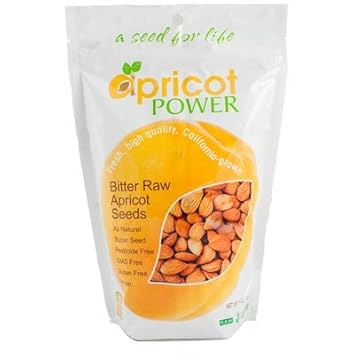
Research is being done that shows apricot seeds are a source for a natural substance that kills cancer cells without destroying the cancer victim's health and wealth. The essential ingredient has been called laetrile or vitamin B17.

What is B17, or Laetrile?


In 1952, a biochemist named Dr. Ernst Krebb, Jr. in San Francisco decided that cancer was a metabolic reaction to a poor diet, and a missing nutrient from modern man's diet could be the key to overcoming cancer. His research led to a compound found in over 1200 edible plants throughout nature. That compound is amagdylin,

Amagdylin is found with the highest concentration and necessary enzymes in apricot seed kernels. A primitive tribe, the Hunzas, were known to consume large amounts of apricot seed kernels. The hard pit had to be broken to get into the soft kernels. There was no incidence of cancer with them at all, ever. And they had long, healthy life spans. Laetrile was created by simply extracting amagdylin from the soft apricot kernels, purifying it and putting it into a concentrated form.

The seeds are more available to consumers now than laetrile because in 1971 the FDA banned laetrile. Reasons are unknown but I assume it's because it would hurt Big Pharma's 200 billion cancer drug industry.  Laetrile is difficult, but not impossible, to purchase. The seeds are actually the soft almond shaped, bitter tasting kernels from inside the pits. 


So How Does It Work?


Amagdylin contains two specific things: one is benzaldyhide, and one is cyanide. Yes, cyanide and benzaldyhide are poisons if they are released or freed as pure molecules and not bound within other molecular formations. Many foods containing cyanide are safe because the cyanide remains bound and locked as part of another molecule and therefore cannot cause harm.

There is even an enzyme in normal cells to catch any free cyanide molecules and to render them harmless by combining them with sulfur. That enzyme is rhodanese, which catalyzes the reaction and binds any free cyanide to sulfur. By binding the cyanide to sulfur, it is converted to a cyanate which is a neutral substance. Then it is easily passed through the urine with no harm to the normal cells.

But cancer cells are not normal. They contain an enzyme that other cells do not share, beta-glucosidase. This enzyme, virtually exclusive to cancer cells, is considered the "unlocking enzyme" for amagdylin molecules. It releases both the benzaldyhide and the cyanide, creating a toxic synergy beyond their uncombined sum. This is what the cancer cell's beta-glucosidase enzyme does to self destruct cancer cells.

Amagdylin or laetrile in conjunction with the protective enzymes in healthy cells and the unlocking enzymes in cancer cells is thus able to destroy cancer cells without jeopardizing healthy cells. Chemotherapy, on the other hand, kills a lot of other cells and diminishes one's immune system while killing an undetermined amount of cancer cells.


Laetrile Treatment


There are many success stories from people using just laetrile or apricot pit kernels. The usual recommendation for prevention is around 5 to 7 over the course of a day. For actual cancer cases use 2 to 3 times that. Some say one kernel for every 10 lbs of body weight. For maintenance after a cure, go back to 5 to 7 per day.

Some laetrile therapists have patients use vitamin B15 tablets and digestive enzymes such as papaya's papain and pineapple's bromalene. Too many apricot pit kernels can create nausea or dizziness. 

For example, Gerson's cancer cure therapy's juicing protocol with the right type of juicer and using coffee enemas to detox the liver could be added with laetrile use. It's hard to go wrong with that healthy combination!

Do your own research by starting with the source links below this article.

Excellent interview of G. Edward Griffin on laetrile and the cancer industry
http://www.youtube.com/watch?v=ZFnP9sU1KW4

A vast, indexed and categorized free source of cancer cure options with details you can use - It's the free online bible of cancer cure options
http://www.cancertutor.com/index.html

Vitamin B17 - contains information on supplements to include with B17 and a list of foods with B17, also a few caveats on using B17
http://www.detailshere.com/cancerb17.htm

Monday, May 16, 2016

The Magic of Bees: The Health Benefits of Honey and Bee Pollen

Honey is one of the oldest known sweeteners.  In Russia, the extremely potent honey from Siberian bees was give out as a prescription for almost all ailments.  In ancient Egypt honey was used to heal wounds. However, not all honey on the store shelves is the same.  Honey is extremely heat sensitive due to the sheer number of beneficial enzymes, vitamins and minerals.  Honey that has been processed in any way losses most of its benefits.  Also, honey that was not properly harvested and made by bees that have been fed sugar instead of naturally collecting pollen from flowers and improper storage can contribute to a loss in nutrients.  Honey that is mass produced is just as bad as sugar.

Raw honey is the best honey.  It is an alkalining food that doesn't ferment in the stomach.  It can be used to counteract acid indigestion.  When mixed with ginger and lemon juices it also relieves nausea and supplies energy.  Raw honey has been reported to be good for respiratory infections, liver problems. stomach ulcers, digestive problems, constipation, strengthen the immune system and promote general vitality.


Manuka honey is most nutritious of honeys.  I have never been able to find it raw but it is worth the hype and the price.  It is only made in New Zealand and Australia from European honey bees foraging on the manuka tree. To be labelled New Zealand mānuka honey at least 70% of its pollen content should come from the manuka tree. In 2004 Britain's National Health Service (NHS) licensed the use of medical grade manuka honey as a wound dressing, And in recent tests conducted at Sydney University's School of Molecular and Microbial Biosciences, manuka honey killed every type of bacteria, including antibiotic-resistant "superbugs". For some reason this antibacterial property is stable and doesn't lose its potency when exposed to dilution, heat or light as in other processed honeys.  So I always have a jar of it in my house that I take out when I feel I am starting to come down with something. Manuka honey comes with a number on the label +5, +10 etc.  the higher the number the more enzymes are in the honey and so the more medicinal the honey is but also the more expensive it is.  So i buy the highest number and use it only when I feel my throat or lungs need it and  when I just want something sweet I use raw honey. 

Also made from bees is bee pollen and it is so full of nutrition it is labeled as a super food! It is about 40% protein and since about half of that is in the form of free amino acids it is ready to be used directly by the body and can contribute significantly to one's protein needs.
It interestingly cannot be synthesized in a laboratory.  When researchers feed bees manmade pollen the bee dies even though all the known nutrients are present in the lab-produced synthesized food.  It is important to recognize that one teaspoon of pollen takes a bee working eight hours a day for one month to gather.

Pollen is known to improve endurance and vitality, aid in recovery from chronic illness, reduce cravings and addictions, regulate intestines, build new blood and boost the immune system.  It is thought to protect against radiation and to have anti-cancer qualities.  Pollen is rich in proteins, free amino acids, and vitamins including B-complex and folic acid. It is a complete food. and according to researchers at the Institute of Apiculture, Taranov, Russia, "Pollen is the richest source of vitamins found in nature in a single food." Research still continues in how many nutrients are in bee pollen but so far over 5,000 enzymes and co-enzymes have been found, far more than is naturally present in any other food!