Monday, January 28, 2019

The Health Benefits of MCT Oil

How MCT Oil Can Help You Lose Weight and More

MCT oil or medium chain triglycerides (MCT’s) are unique fatty acids that are found naturally in coconut and palm oils.  They have a remarkable ability to stabilize blood sugar and enhance ketone body production.  This process makes MCT’s a powerful tool to reduce inflammation, improve metabolism and enhance cognitive function.

The term “medium” is in reference to the length of the chain of fatty acids.  Oils can have short, medium or long chains.  Most oils are a combination of short, medium and long chain fatty acids.  MCTs are the easiest type of fatty acid that your body can burn for calories. They get absorbed directly from the gut to the liver and then are used for energy instead of being stored as fat.
Research confirms that MCTs can make you lean and healthy. In one study, researchers compared the results of MCTs with long-chain triglycerides on body fat, energy expenditure, appetite, and other aspects of weight loss in overweight men. They put these men on different diets for 28 days. One group ate a coconut-oil-rich diet high in MCTs such as caprylic acid and lauric acid. The other group ate a diet rich in long-chain triglycerides like olive oil. They then switched the diets so that they could see differences in the same subjects.

The researchers found the coconut group lost more body fat, which they attributed to a greater increase in energy expenditure and burning fat. Coconut oil actually sped up their metabolisms, allowing them to lose more belly fat and curbing their appetite compared with the men on the olive-oil-rich diet.

In fact, studies suggest that MCTs can help men burn about 460 extra calories a day and women about 190 extra calories (I know, women it’s just not fair!).  MCTs also affect your hormones, including appetite-controlling hormones, helping you feel full.


MCTs are brain food:
Ketones are unique energy producing molecules made from fatty acids.  Our bodies can make them from stored fat or from MCTs.  Ketones feed all the cells of the body, but in particular they are a preferred fuel for the brain.

Research has demonstrated that MCTs can readily cross the blood-brain barrier (BBB) and be oxidized by the brain. Thus, MCTs may provide both a direct and an indirect brain fuel source via the generation of ketones.  More information on brain health is in this podcast and includes steps to follow to help with ADD, poor memory, lack of motivation, depression, dementia and more.  It includes:

Detoxifying the body of pesticides,  and heavy metals

Taking in probiotic foods to keep the gut balanced

Eating more essential fatty acids than just coconut oil which are vital for the brain, like avocado, flaxseed, hemp seed, oily fish, pumpkin seeds, and walnuts

Reducing inflammation through the diet  - Listen to our podcast on Chronic Inflammation 

Making quality sleep a priority

Reducing psychological and emotional stress through exercise, meditation, journaling


You can also get a pure MCT oil that is concentrated caprylic and capric acid.  An MCT oil is processed in a manufacturing plant to remove all the longer chain fats and other compounds except these two fatty acids.  But be careful with the brand of MCT oil you purchase as it is important to get one that is tested for purity and heavy metals. This is the MCT oil I use.

MCTs raise up ketones and lower blood sugar naturally.  They have a strong blood sugar stabilizing effect that helps to reduce inflammation.

You might be hesitant to use coconut oil or MCT oil because it's high in saturated fat, which has unfairly been demonized for decades. There is a world of difference between quality saturated fat in coconut or MCT oils and what you might get in a fast-food meal.

You can get MCTs from whole foods: here’s a list of MCTs in foods, as a percentage of total fats (source):
Coconut oil: 15%
Palm kernel oil: 7.9%
Cheese (if you tolerate dairy): 7.3%
Butter: 6.8%
Milk: 6.9%
Yogurt: 6.6%


But you can also get MCTs from specially concentrated MCT oil, which is much more concentrated (it’s almost entirely MCTs).  A tablespoon of coconut oil will give you 2 grams of MCTs while MCT oil will give you 15 grams of MCTs.


Most people tolerate MCT oil very well, however, too large of dosages too quickly can cause gastrointestinal problems such as nausea, diarrhea and vomiting.  If you have this problem, don’t panic and give up on MCT oil right away. You can easily reduce or eliminate these symptoms by starting with very small doses at a time.  This would mean ½ tsp several times daily and slowly increasing the dosage as tolerated.

Adding MCT oil can substitute for some of the oil in your diet but should not be used to replace all the fat in your diet.  Begin using MCT 1 tablespoon per day and slowly increase over several days.  Too much MCT may result in diarrhea or a stomach ache.  1-3 tablespoons per day is recommended.  


How To Use MCT Oil:

MCT oil is very versatile and can be used as a salad dressing, in smoothies, for cooking or just straight up off the teaspoon.  Here are the most popular ways to use MCT oil:

Cooking Oil:  Highly stable under heat like coconut oil but no coconut flavor

Salad Dressing:  No major flavor so combine it with herbs and vinegar
In Coffee & Tea:  Great for thickening up coffee or tea and improving their health benefits. Here’s a recipe for Bullet Proof Coffee. 
Smoothies:  Add 2 tbsps of MCT oil in a smoothie to curb hunger and have the smoothie keep you satisfied longer.


Sunday, January 20, 2019

Great Apple Cider Vinegar Drink

Fire Cider  

I give a very specific apple cider vinegar drink frequently to patients to help change the pH of their system and in this way it can help with joint pain, improve digestion, help with weight loss, kill candida and more.  To read more about apple cider vinegar and this medicinal drink, click here.

I now want to take the time to share with you another type of medicinal apple cider vinegar drink called Phoenix Rising Fire Elixir.  It is made by a farm in New Paltz, NY called Tweefontein.  It is a very spicy tonic that includes Organic Apple Cider Vinegar, Horseradish, Garlic, Ginger, Onion, Turmeric, Paprika, Cayenne, Pure Raw & Unfiltered Honey.  The tonic is so highly concentrated that all you need is a tablespoon diluted in warm water.   If spicy food is not your thing then stick with my recipe for this is only for the brave.  The good news is you can dilute it to any concentration you can handle.  
I like how the drink is pre-made so all you have to add is water.  It's more medicinal if you add the juice of 1/2 a lime.  Also, I like Fire Elixir because with the ginger, garlic and onion it will boost your immune system for sure!

Saturday, January 5, 2019

Omega 9s Found in Algae Superfood

What you need to know about Omega 9s


You should know about Omega-9s (also known as monounsaturated fats) for their potential to regulate blood sugar levels, prevent cancer and promote a healthy weight and heart.  Since our bodies can manufacture it, omega-9 technically isn’t classified as an essential fatty acid. However, foods rich in omega-9 are still recommended because of the role it plays in our health. Good sources for omega-9 include:
  • Extra virgin olive oil
  • Olives
  • Avocados
  • Nuts including almonds, pecans, pistachios, hazelnuts, and macadamia nuts
  • Sesame seed oil
 Algae has been touted as a superfood in its own right, but the newest use for algae is in the production of ­omega-9 cooking oil. The process doesn't use genetically modified organisms or chemical extraction, further broadening its appeal. I use Thrive algae oil.  Compared to olive oil, Thrive algae oil contains a higher percentage of heart-healthy monounsaturated fats and is lower in saturated fats. It has a high smoke point of 485 degrees F, which means you can use it in baking, roasting and sauteing. So what does algae oil taste like? It's completely neutral and odorless, so you can use it in any recipes where you want healthy fat without changing the flavor of the food.

Unlike algae typically found in the sea, Thrive algae were originally sourced from the sap of a chestnut tree.m
The algae are then grown in fermenters, just like the kind used for making wine and beer. The algae naturally convert renewable plant sugars to oil in just a few days. Finally, using the same method as coconut and seed oils, Thrive presses the algae to release the oil. The result is an oil with the highest level of good fats and low levels of saturated fats. 

So I stick with olive oil for dressings and dips and love algae oil for stir-frying or baking for its mild flavor, healthy fat profile and a high smoke point.  It's definitely a healthy alternative to lower-cost .


Wine, brie and grapes

Tuesday, January 1, 2019

Are Fermented Foods the Same as Probiotics?


Are Fermented Foods the Same as Probiotics?

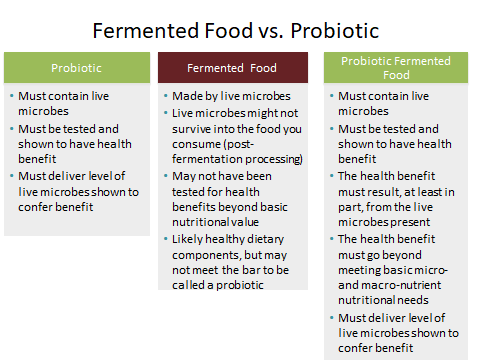
Consider the fundamental change from milk to brie cheese or grapes to wine. Such is the power of fermentation. Fermented foods result from the growth and metabolism of live cultures, transforming a precursor food (such as milk) into a fermented food (cheese). The fermentation process may result in changes in taste, texture, aroma, nutritional value, microbial content and perhaps health benefits that extend beyond the basic nutritional value of the food. Because of this last property, some call fermented foods ‘probiotics’, but in fact they are not (necessarily) the same.

Wine, brie and grapes

Probiotics are live microorganisms that, when administered in adequate amounts, confer a health benefit on the host. Unlike fermented foods, probiotics must have been tested in human studies and shown to have a beneficial health effect. Fermented foods don’t require such testing, although some have been. Further, some fermented foods are treated after they are made (for example, sourdough bread is baked), and do not contain live microbes at the point of consumption. To the extent a fermented food has been tested in human studies and shown to be beneficial and delivers a sufficient ‘dose’ of beneficial live microbes, it meets the bar of a probiotic. (See figure below). This is the case with several probiotic yogurts and fermented milks on the market today.
You likely have seen publicity and testimonials about how good for you fermented foods such as kombucha or sauerkraut are. Many of these foods may be good for your gut or immune system, but not as good as probiotics. If you enjoy them and they make you feel better, they are great additions to your diet. Scientists are now speculating that any source of live microbes may turn out to be beneficial.  To learn more about the benefits of probiotics read this review.
The body of evidence substantiating benefits of probiotics is quite extensive. Over 1800 human trials have been conducted using probiotics. See table below for a list of some benefits of probiotics shown in human trials. Keep in mind that benefits are tied to specific strains. It’s easy to grasp this concept if you look to the animal world. Different breeds of horses, for example, have quite different strengths and functions. You wouldn’t ride a pony in the Kentucky Derby.  Similarly, different strains of even the same species of a probiotic may have different benefits. In some cases, more than one independently tested probiotic product confers the same benefit. In other cases, only a single probiotic product has been shown to be effective. The best evidence for probiotic use is for prevention of antibiotic-associated diarrhea and C. difficile infection, management of certain gut symptoms, and prevention of necrotizing enterocolitis in preemie infants. People often wonder if probiotics have any benefit for healthy people. Benefits such as improved tolerance of dietary lactose for lactose intolerant people, management of blood lipids, improved oral health, reduced incidence of common infectious diseases such as the common cold, and management of gut symptoms all are demonstrated in reasonably healthy people.
The probiotic marketplace can be confusing for consumers. If you aren't being muscle tested for what probiotic your body needs here are some basic principles to guide your search:
  • There is no one strain or one dose that is best. Sometimes lower dose products or products with fewer strains have the best evidence.
  • One of the biggest challenges in the probiotic market is keeping the probiotic strain alive. Responsible manufactures go to great lengths to be sure their probiotics retain viability and deliver an efficacious dose through the end of the product’s shelf life. Unfortunately, not all products on the market are responsibly formulated. Consumers should buy products from companies they trust like I trust Standard Process. 

BenefitPopulation
Treat colic in breastfed infantsInfants
Prevent atopic dermatitis/food hypersensitivityInfants
Prevent necrotizing enterocolitisPremature infants
Treat acute diarrheaInfants, children
Manage symptoms of occasional constipationAdults
Manage symptoms of lactose intoleranceChildren, adults
Reduce incidence and duration of common infectious diseases (upper respiratory tract and gastrointestinal)Children, adults
Prevent antibiotic-associated diarrheaChildren, adults
Extend remission of ulcerative colitisAdults
Improve therapeutic efficacy of antibiotic treatment of bacterial vaginosisAdult women
Reduce low density lipid cholesterolAdults
Prevent Clostridium difficile diarrheaChildren, adults
Reduced prevalence of dental caries and gingivitisInfants, children

Monday, November 26, 2018

My Secret to Staying Healthy

My Secret to Staying Healthy

Staying healthy is not a goal of mine but a goal that has been reached and is now a lifestyle.  Of course my lifestyle includes eating well and taking whole food supplements but it also includes other daily habits that I feel are part of my healthy foundation.  These 3 habits are not individualized like the supplements and eating programs that I develop for patients.  They will, across the board, help anyone that is looking to get healthy and stay healthy.  I think life has it's course and if we don't enforce the basics on ourselves bad habits slowly creep in.  So start with these good habits and see how it feels to go back to the basics. Start incorporating all the habits at once or just start with one and then once that one becomes a habit incorporate another. 


10 hours before bed — stop drinking caffeine.

Now, when it comes to beverages, if you test well for it, caffeine can be healthy for you as long as you don’t fill it with stuff that’s bad for you, like sugar, sweeteners, or dairy.  I can do one small cup of coffee a day but I make sure I have it only in the morning.  If I don't have it with breakfast then I won't have it at all.  So I encourage you to put a hard stop on caffeine 10 hours before bed. For some of you this could include chocolate.  Even the caffeine in chocolate is enough of a strong stimulant, which can last well into the night before it finally wears off. And when that happens, you can kiss the quality of your sleep goodbye — which causes you to feel groggy the next day. So, it's important to give your body enough time to rid itself of caffeine.

At least 3 hours before bed — stop eating food.

I used to be guilty of this one myself. But the “midnight munchies” can often lead to weight gain, acid reflux… and let’s not forget, it’s a huge energy drain on your body! You see, when you snack before bed your body is forced to digest all of the nutrients in your food which puts a dent in your energy reserves. Instead of relaxing, your body is hard at work digesting. So, to enjoy more energy: I recommend you finish eating at least 3 hours before bed. This will give your body the time it needs to digest your food the way nature intended and allows you to wake up the next day feeling refreshed and full of life. 

1 hour before bed — no more “screen time.”

Electronic screens emit rays of “blue light,” which can throw your sleep cycle out of whack. Thankfully, during the daytime, these rays aren’t so bad. In fact, “blue light” can even help to boost your attention, reaction times, and mood. But, at night too much exposure to “blue light” can confuse your hormones into thinking it’s still daytime which wreaks havoc on your “internal clock” and robs you of energy.

So, as a general rule: I recommend you put the electronic devices away 1 hour before bed. (That means no TVs, cell phones, laptops, etc.) Personally, I love to read a good book before bed but now I'm busy enjoying the baby. 

I’m sure you’ll agree, energy is one of the greatest gifts we can have in life and these good habits will help you have more of it. As you can tell , if you are going to incorporate these healthy habits you need to know what time you are going to bed.  So for some of you, actually having a bedtime will be a new habit.  So if you don't actually go to bed around a specific time I suggest you start with that first.  

Sunday, November 18, 2018

Holiday Recipes

Holiday Recipes

When trying to eat healthy we tend to feel deprived at times.  It's easy to feel that way around the holidays.  The best thing to do is to find healthy versions of the same recipes so you don't feel like you are going without.  Enjoy these healthy versions!


GARLIC MASHED NO-TATOES  
White potatoes -- while nutritious and natural -- can have potentially significant impact on blood sugar levels. Try adding mashed cauliflower to your holiday table instead. To prepare it, break a head of cauliflower into florets and then boiling or steaming until tender. Drain the cooked cauliflower, then mash it up. Toss in tasty additions, such as organic butter from grass-fed cows or olive oil, roasted garlic (optional), ground pepper and sea salt. 


PALEO PUMPKIN PIE 
15 oz canned pumpkin puree, or 11⁄2 cup roasted pumpkin puree 
3 large eggs
1⁄2 cup full fat coconut milk (the hard, cream part)
1⁄2 cup honey 

1 tablespoon ground cinnamon 
1 teaspoon ground nutmeg
1⁄8 teaspoon celtic sea salt
1 Paleo Pie Crust, unbaked 

In a food processor combine pumpkin puree, and eggs. Pulse in coconut milk, honey, cinnamon, nutmeg, and salt. Pour filling into Paleo Pie Crust. Bake at 350° for 45 minutes. Allow to cool then refrigerate for 2 hours to set up 
Paleo Pie Crust 
2 cups blanched almond flour (not almond meal)
 1⁄4 teaspoon celtic sea salt
2 tablespoons coconut oil, room temperature
1 large egg 

Place flour and salt in food processor and pulse briefly. Add coconut oil and egg and pulse until mixture forms a ball. Press dough into a 9 1/2-inch glass pie dish 

CRANBERRY SAUCE 
Cranberries provide ample antioxidant proanthocyanidins -- natural substances that help keep your cells healthy. But while cranberries that appear in one solid, canned piece or in sugar-laden sauces aren’t health supporting, homemade cranberry sauce is Paleo-friendly. Try making cranberry sauce with fresh cranberries, pure orange juice, raw honey and a touch of fresh ginger, orange zest, cinnamon and grade A maple syrup. 

LOW CARB BREAD - Serves 8 
2 cups blanched almond flour (not almond meal) 1⁄4 cup golden flaxmeal
1⁄2 teaspoon baking soda
1⁄2 teaspoon celtic sea salt 

2 tablespoons apple cider vinegar
5 large eggs
Optional 1⁄8 teaspoon of stevia or tablespoon or two of honey 

In a food processor combine almond flour, flaxmeal, baking soda, and salt. Pulse in apple cider vinegar and eggs. Transfer batter to a greased 8" cast iron skillet. Bake at 350° for 20-25 minutes. Serve 

PUMPKIN CRUMB MUFFINS - Serves 8 
Muffins 
5 large eggs
1⁄3 cup canned pumpkin puree 1⁄3 cup coconut sugar
1⁄4 cup coconut flour
1⁄8 teaspoon celtic sea salt
1⁄2 teaspoon baking soda
1 tablespoon pumpkin pie spice 

Topping 
1⁄3 cup palm shortening
1⁄3 cup coconut sugar
2 tablespoons coconut flour
2 tablespoons ground cinnamon 

In a food processor, combine eggs, pumpkin, and coconut sugar. Pulse in coconut flour, salt, baking soda, and pumpkin pie spice until well combined. Divide batter between 8 paper lined muffin cups. Rinse out food processor. In a food processor, combine shortening and coconut sugar. Pulse in coconut flour and cinnamon. Sprinkle topping over cupcake batter. Bake at 350° for 20-25 minutes. Cool 1 hour. Serve 

Monday, November 12, 2018

5 Benefits of Collagen Powder

5 Benefits of Collagen Powder

Have you heard about collagen powder?  It seems like the next big hype but this time I actually feel the hype is warranted.  Collagen can now be found in just about everything — from creams and cosmetics, to powders and pills. As the most abundant protein in the body, collagen is found in your muscles, skin, blood, bones, cartilage, and ligaments. You may want to consider squeezing in an extra serving of this vital protein for several reasons, as collagen is a building block that:
  • promotes skin elasticity
  • holds together your bones and muscles
  • protects your organs
  • heals the gut
The good news is that your body produces collagen on a regular basis. But, it does slow down with age. It also slows down with smoking, sun exposure, and an unhealthy diet. If you don't have enough collagen in the body you may start to see wrinkles and sagging skin, or even experience joint pain.
Keep reading to discover five specific benefits you may experience if you take the time to up your collagen consumption.

1. Eases joint pain

As your cartilage weakens and deteriorates with age, you may start to feel stiff, achy joints. It’s possible that upping your collagen intake may help reduce joint pain and alleviate symptoms of arthritis.
In a 2009 study, participants took a collagen supplement for 90 days. Results showed that osteoarthritis symptoms decreased by 40% while the severity of symptoms dropped by an impressive 33%.
In an older study from 1993 with the same collagen supplement, participants with severe rheumatoid arthritis saw a reduced number of swollen and tender joints — 4 out of 60 participants also experienced complete remission. 

2. Reverses skin aging

One of the most well-known benefits of collagen is its ability to promote glowing, vibrant skin. This essential protein provides elasticity to the skin, helping it to appear more youthful and healthy. But as you get older and collagen production declines, fine lines, loose skin, and dryness can occur. 
A study published in 2014 randomly chose 46 of 69 women, ages 35-55 years old, to take a collagen hydrolysate supplement. The rest of the group took a placebo. The women who took the collagen showed an improvement in skin elasticity within four weeks.
The same manufacturer also conducted another study in 2014 with the same supplement, which significantly reduced wrinkles after just eight weeks.

3. Helps build muscle and burn fat

Collagen is a major component of muscle tissue, so it should come as no surprise that it can have a big impact when it comes to building muscle mass. Plus, collagen also contains a concentrated amount of glycine, an amino acid involved in the synthesis of creatine which provides muscles with the fuel needed to power through your workout. So what happens when you add collagen to your workout routine?
There’s not much research on collagen and exercise, but a study in 2015 looked at collagen supplements in 53 older males with sarcopenia, a condition where you lose muscle mass due to aging. After 12 weeks, those who took supplements along with resistance training saw an increase in fat loss and muscle strength more than the placebo group.

4. May reduce cellulite

Besides keeping your skin healthy and glowing, collagen may also help improve the appearance of stubborn cellulite. Cellulite is when the layer of fat under the skin pushes up against the connective tissue, creating a dimpled or lumpy appearance on the skin.
Another study was sponsored in 2015 by manufacturers to see what collagen would do for cellulite. They randomly assigned 105 women, ages 24-50, to take collagen for six months. Those who did demonstrated a clear improvement in skin texture.  Yet cellulite is incredibly common — an estimated 80 to 90% of women have it. It’s a natural part of aging and skin formation and not a cause for concern.

5. Improves digestive health

Collagen is in the gut’s connective tissue and can help support and strengthen the protective lining of your digestive tract. This is critically important because alterations in the barrier function of your intestine, also known as leaky gut syndrome, can allow particles to pass into the bloodstream. This may result in inflammation.
In fact, an older study from 2003 looked at 170 individuals with inflammatory bowel disease and found that they were more likely to have lower levels of serum collagen. So the current theory is that by increasing your intake of collagen, you could help build up the tissues that line your gastrointestinal tract and promote better gut health. 
Here are a few easy ways to kick up your collagen intake:

1. Experiment with bone broth

Bone broth is made by simmering bones to help extract the flavor and beneficial nutrients. Not only is it an excellent source of collagen, but it’s also tasty and easy to add to your diet by using it to make soups and stews, whole grains like rice and quinoa, and even to moisten leftovers. You can easily make bone broth at home, or save time by purchasing it in powder form. The brand I love for powdered bone broth and carry in the office for your convenience is Organixx.  

2. Try out powdered gelatin

Gelatin is essentially the cooked form of collagen, and powdered gelatin can be a quick and convenient way to bump up your collagen consumption. It can be mixed into any liquid, including soups, stews, and broths. You can also enjoy it to satisfy your sweet tooth by making homemade Jell-O or natural fruit snacks.

3. Supplement with collagen peptides

Collagen peptides are another easy option to get your fix of this important amino acid. Most brands sell hydrolyzed collagen peptides, which means that the amino acids in collagen have been broken down so that they’re more easily digested and absorbed.
Collagen powder can also be added to smoothies, hot beverages, or baked goods to pump some extra protein into your day. The collagen powder I recommend the most is also from Organixx which we also have in the office.  

There is also ways to get collagen in through your daily diet. If you want to consume collagen naturally, eat a well-balanced, high-protein diet that includes animal products. Collagen is in beef, chicken, fish, and egg whites.

But you don’t want to eat too much protein, either. Your body doesn’t tell the collagen where to go. Instead, it distributes the collagen like it would any other nutrient. So taking collagen supplements works much like exercise — it’s difficult to target a specific need, but increasing your intake could still have benefits.